What We Mean by "Ethics" in Software
The word "ethics" makes people nervous. It sounds like a lecture, or a philosophy seminar, or someone about to tell you everything you're doing is wrong. That's not what this site does.
When Twisted Ethics talks about ethics in software, we mean something specific and practical: does the software treat people honestly? Does it give them real choices? Does it tell the truth about what it's doing? Those aren't abstract questions. They're design decisions, and they happen every time someone builds a feature, sets a default, or writes a notification.
Defaults are decisions. Someone chose these settings before the customer ever saw them.
The practical definition
Here's the test we apply: if the customer knew exactly how this feature worked, in full detail, would they still be okay with it? If the answer is yes, the feature is probably fine. If the answer is "they'd be uncomfortable" or "they'd feel tricked," that's an ethics problem. Not a legal problem, not necessarily a moral failing, but a trust problem that will eventually cost the business something.
This framing matters because it keeps the conversation grounded. We're not interested in whether a practice violates some philosophical principle. We're interested in whether it would survive daylight. Would you explain this feature to a customer's face? Would you put it on your website? If not, that tells you something.
What we focus on
Most of our coverage centers on service businesses: auto repair shops, HVAC companies, plumbers, dental offices, veterinary clinics. These are businesses where trust between provider and customer is not optional. It's the whole relationship. And increasingly, software mediates that relationship in ways neither party fully understands.
The specific areas we watch include AI-driven communication where machines talk to customers while pretending to be humans. Dark patterns where interface design steers people toward choices they didn't intend. Consent and disclosure where businesses collect data or make recordings without meaningful transparency. And software defaults that optimize for vendor revenue rather than customer outcomes.
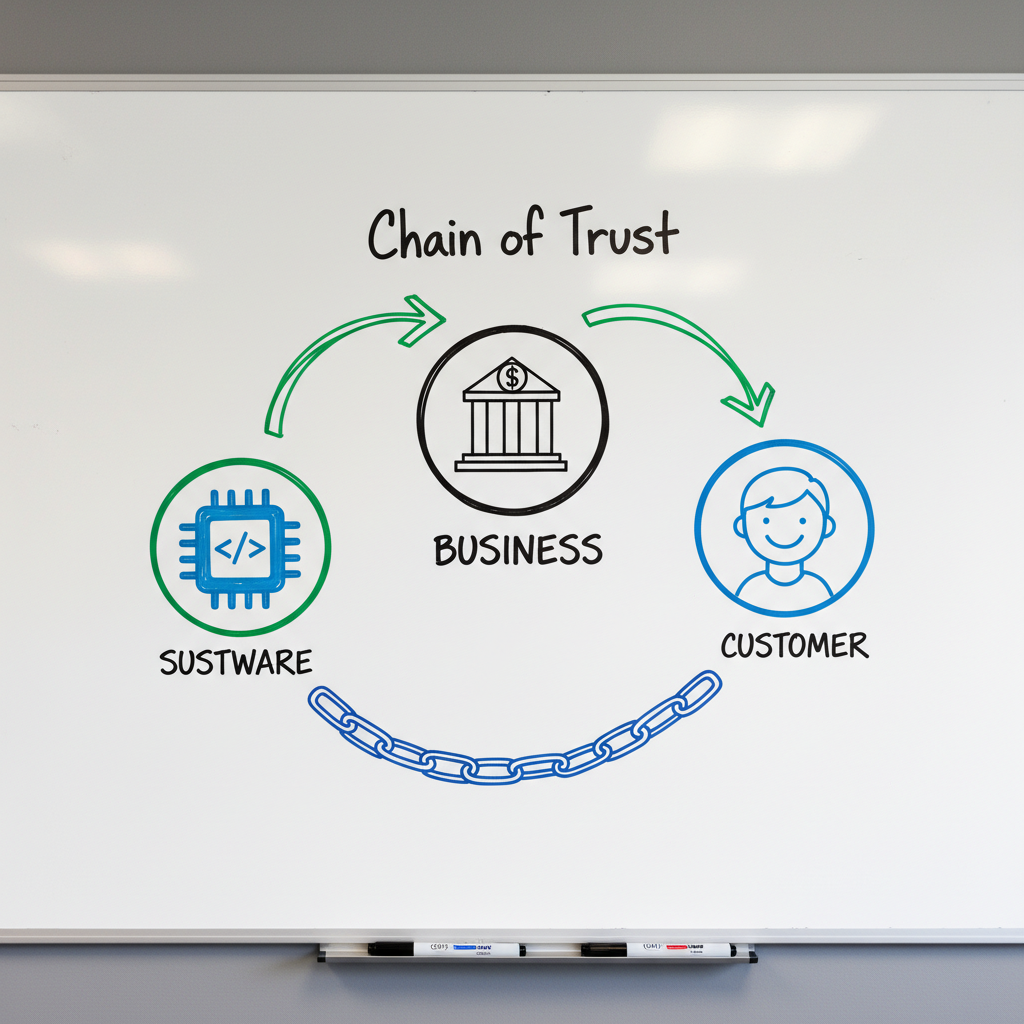
The trust chain runs through three parties. Software vendors rarely think about the last one.
What we don't do
We don't grade companies on a moral scale. We don't call people evil. We don't pretend that every questionable design choice is a deliberate attempt to harm someone. A lot of bad practices in software come from laziness, from copying what competitors do, from never asking the question in the first place. That doesn't make the outcome better for the customer, but it changes how you should think about fixing it.
We also don't pretend to be neutral. Neutrality on questions of honesty and transparency isn't a virtue. If a feature is designed to prevent customers from making informed decisions, we'll say so. If a tool genuinely helps businesses serve people better, we'll say that too. The about page has more on where this perspective comes from.
The standard we apply
Transparency over cleverness. Real choices over manufactured ones. Disclosure by default, not by accident. These aren't radical ideas. They're the minimum standard for software that handles other people's money, time, and trust. The fact that the bar is this low and most software still doesn't clear it is exactly why this site exists.
Every article on Twisted Ethics comes back to this: the customer deserves to know what's happening. The business owner deserves to know what their tools are doing. And the software vendors who get this right will win in the long run, because trust compounds and deception doesn't. That's not idealism. That's just how the economics of trust work.

The daylight test: would this feature survive being explained in plain language to every customer?