Dark Patterns in Service Business Software
Dark patterns have a branding problem. The term sounds dramatic, like something that belongs in a security briefing or a documentary about big tech. That framing makes it easy for small business software vendors to dismiss the concept entirely. "We're not Facebook," they say. "We're just helping shops schedule appointments." And then their booking form pre-selects a $49 add-on service, hides the removal option behind a gray-on-gray "modify" link, and uses countdown language to create urgency for a time slot that isn't actually scarce. That's a dark pattern. It's just wearing work boots instead of a hoodie.
The definition is straightforward. A dark pattern is a user interface design choice that steers people toward an action they didn't intend to take, typically in a way that benefits the business at the customer's expense. The key word is "intend." If the customer would have made the same choice with full information and a clear interface, the design is fine. If the design relies on confusion, inattention, or social pressure to get the outcome, it's a dark pattern. The customer's wallet is lighter, and they're not entirely sure how it happened.
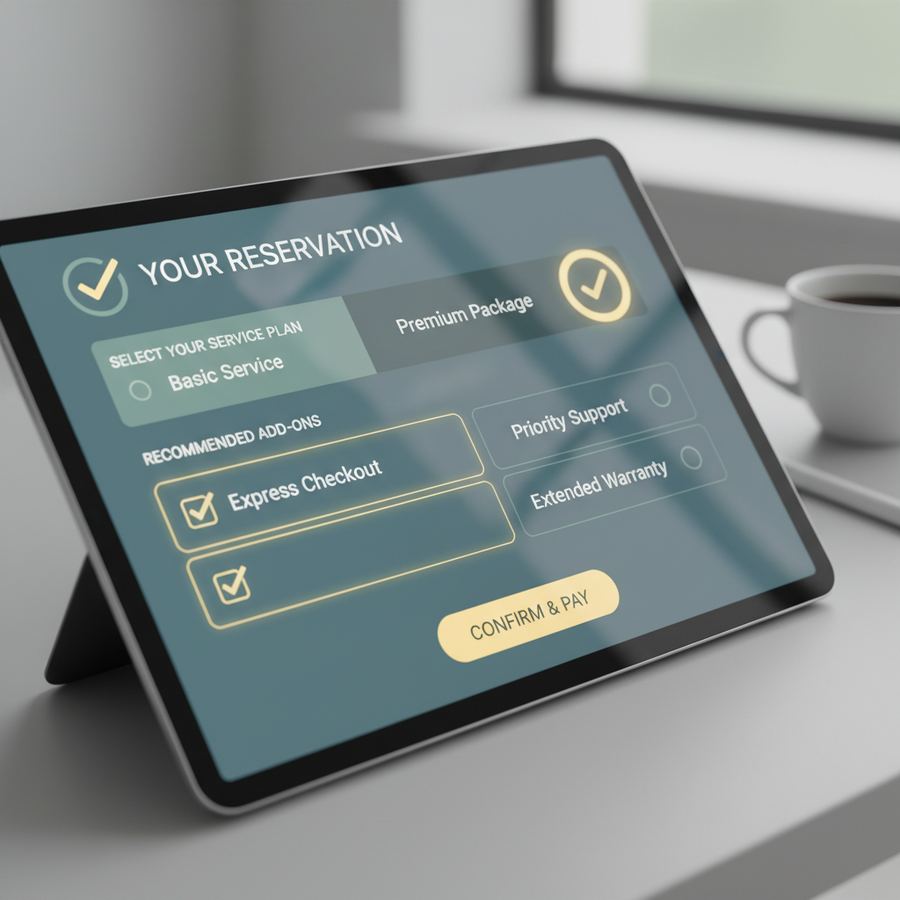
Three pre-selected add-ons on a booking form. The customer came for an oil change. The software had other plans.
Service business software is full of these patterns, and most of them arrived without fanfare. Nobody at the software company held a meeting and decided to trick customers. What happened is more mundane: a product team optimized for "conversion," a designer tested variations and picked the one that increased average order value, and nobody in the room asked whether the increase came from genuine customer interest or from interface manipulation. The metric went up. The feature shipped. It became the default for ten thousand businesses overnight.
The service industry is especially vulnerable
Dark patterns thrive in contexts where customers have limited knowledge, limited time, and limited alternatives. Service businesses hit all three. A homeowner calling for emergency HVAC repair doesn't have time to comparison shop. A car owner looking at a digital inspection report doesn't have the expertise to evaluate every recommended service. A pet owner booking a vet appointment is emotionally invested in a way that makes them reluctant to question add-ons labeled as "recommended care."
These aren't edge cases. They're the core customer scenarios for most service businesses. The software knows this. It's designed to capitalize on exactly these dynamics. Urgency messaging works because the customer is already in a hurry. Pre-selected services work because the customer doesn't feel qualified to remove them. Confirmation shaming works because nobody wants to click "No, I don't care about my vehicle's safety." The patterns are effective precisely because they exploit the power imbalance that's inherent in service relationships.

A countdown timer on appointment availability. The slots aren't actually disappearing. The timer exists to prevent comparison shopping.
Why it's hard to push back
Business owners using dark-pattern-laden software face an uncomfortable situation. The software increases revenue. Removing or disabling the manipulative features means accepting lower numbers. In a competitive market where every other shop is using the same platform with the same defaults, being the ethical outlier feels like being the sucker. This is the prisoner's dilemma of service business software, and the vendors designed it this way. When everyone's default is manipulation, the honest operator looks like the underperformer.
The vendors also have a convenient shield: "The business owner can turn it off." Technically true. Practically meaningless. Most business owners don't know the features exist, don't understand what they do, and wouldn't know which settings to change even if they wanted to. Putting the burden of ethical design on the user instead of the builder is itself a kind of dark pattern. It's an illusion of control that functions as permission for the vendor to do whatever maximizes engagement.
The articles below catalog specific dark patterns found in service business software. We focus on patterns that are widespread, that affect real customer decisions, and that the industry has largely normalized. If you're new to the concept, start there. If you want to know what to look for in your own software, the specifics are below.
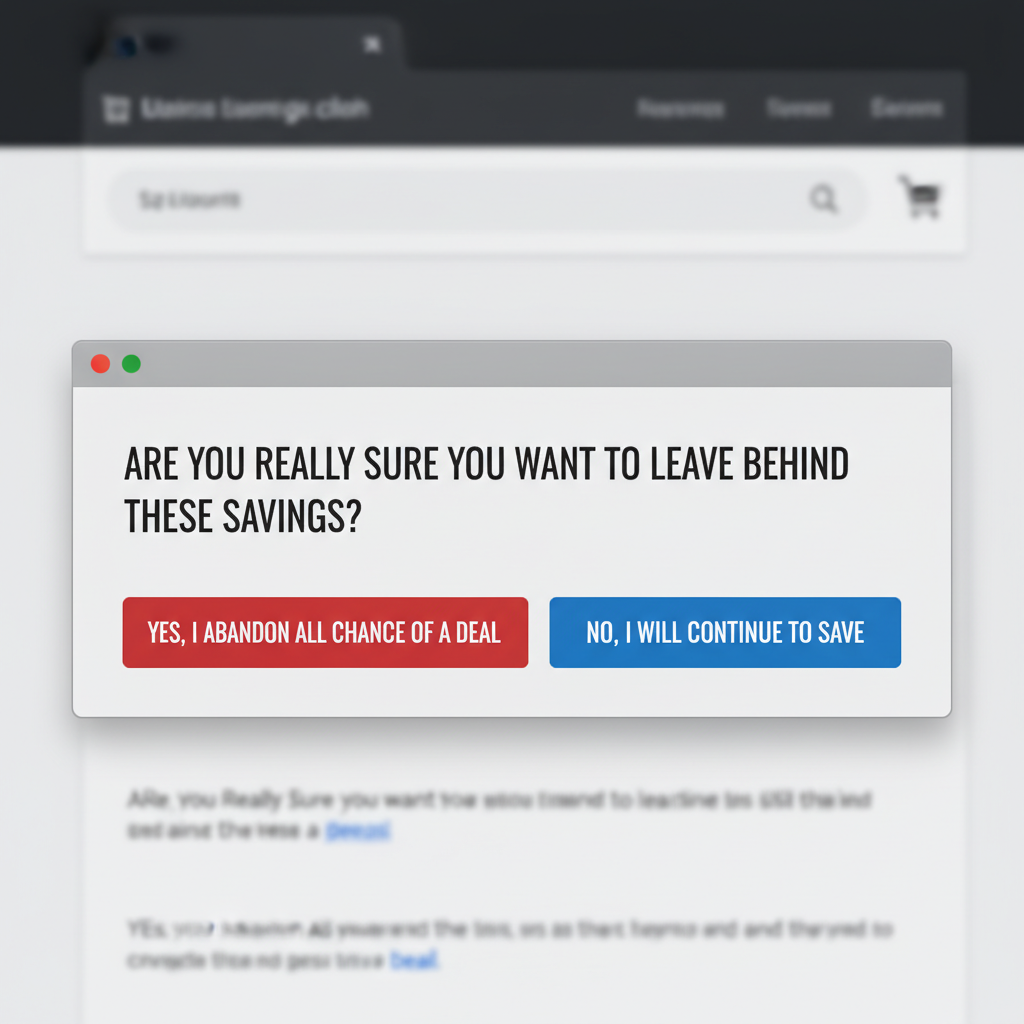
Confirm-shaming: making the customer feel irresponsible for declining. The "no" option is designed to hurt.